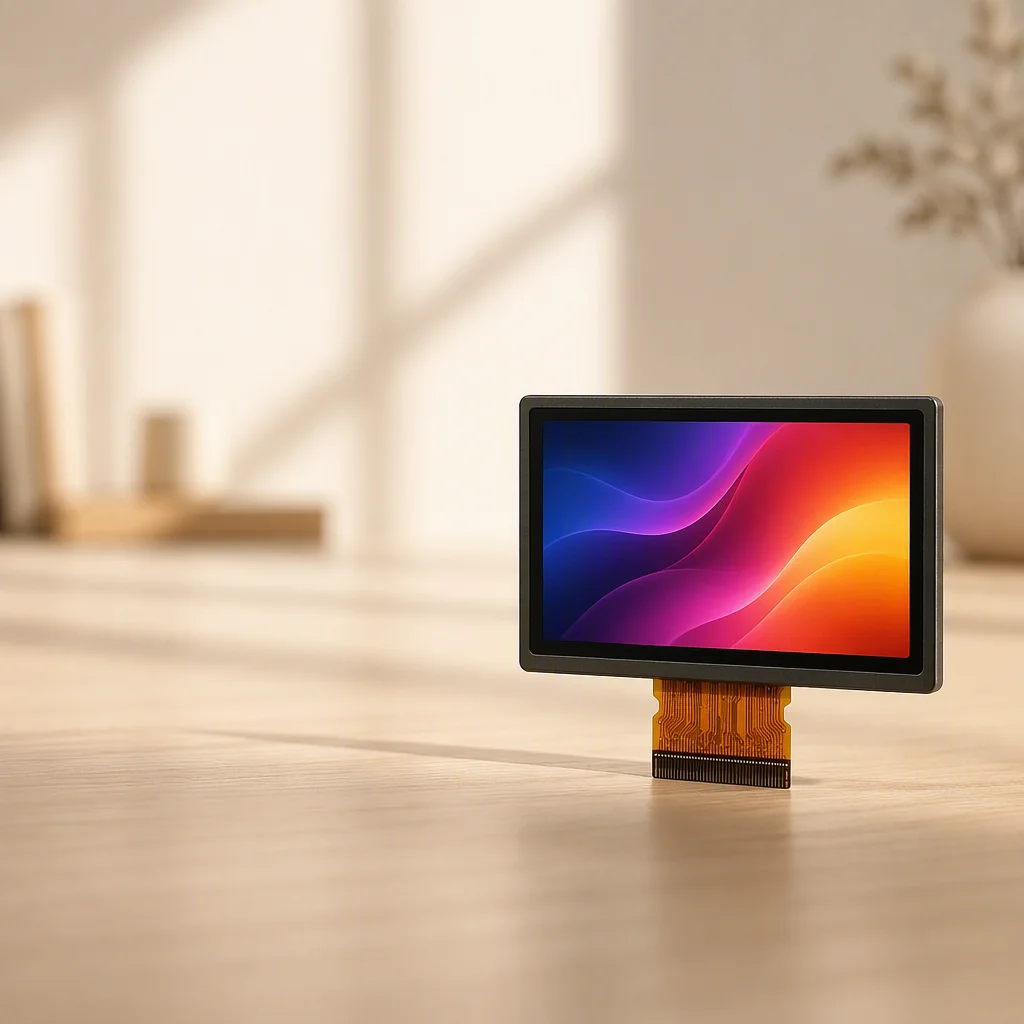
Automotive display modules built for the road and the cabin
AEC-Q100 Grade 3 displays rated -40~+85°C, surface temperature held to ≤45°C, vibration-tested and sunlight-readable at 1,000 nits — produced under IATF 16949 with supply aligned to the vehicle lifecycle.
Where automotive displays fail on the road
Eight failure modes we see in aftermarket and Tier-2 programs, each paired with the response engineered into our automotive LCM line. Every one is a documented gap, not a promise.
| Pain Point | The Cost | EMS-Display Response |
|---|---|---|
| Cabin temperature, -40~+85°C | Consumer panels rated -20~+70°C fail cold starts and parked-car heat soak | AEC-Q100 Grade 3 parts operate -40~+85°C with wide-temperature glass |
| Reliability stress tests | AEC-Q100 (IC) / Q101 (discrete) / Q200 (passive) pressure tests reject unqualified components | Parts pass the AEC stress family with full test data packs on request |
| Surface temperature ≤45°C | High-brightness LED backlights push the touch surface past 45°C in the cabin | Thermal design holds surface temperature ≤45°C at rated ambient |
| Vibration on the dash | Constant road vibration fatigues solder joints and connectors | Vibration-tested assembly with reinforced FPC and locking connectors |
| Sunlight glare through glass | 300 nits panels are unreadable; drivers glance away for seconds at speed | 1,000 nits sunlight-readable stack with AG anti-glare and AR coating |
| Supply vs vehicle lifecycle | Vehicles live 7–10 years; panels hit EOL in 3–7, mid-model-year | 7–10 year vehicle-lifecycle supply program with locked BOM |
| Homologation re-files on swap | A substitute screen re-opens EMC and safety files — months of delay | Same-footprint cross-spec replacement shipped with PPAP documentation |
| Touch in direct sun | Reflective cover glass reduces touch accuracy at noon | AG + AR cover stack tuned for in-vehicle ambient light |
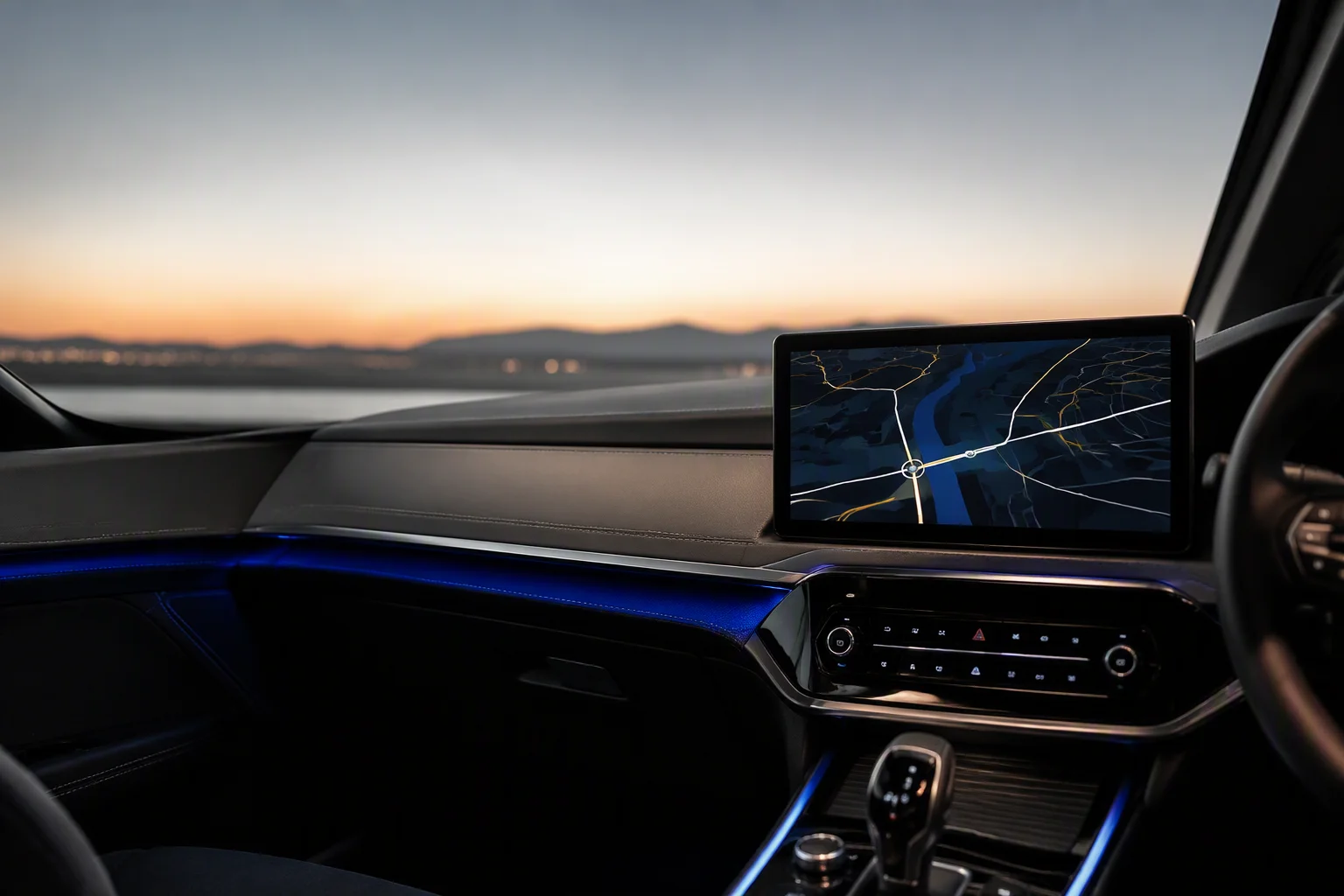
The automotive line, specified to the digit
Standard automotive-grade parameters with custom variants on demand. Quote these against your SoC, your cabin layout and your vehicle program.
| Parameter | Specification |
|---|---|
| Size range | 7" center stack, 10.25" 1920×720, bar 8.9" 1920×720; custom formats |
| Resolution | 1024×600, 1280×800, 1920×720 (bar) and 1920×1080 (FHD) |
| Temperature grade | -40~+85°C operating, AEC-Q100 Grade 3 |
| Brightness | 1,000 nits sunlight-readable; dimmable to 10% for night driving |
| Surface temperature | ≤45°C via LED current derating and aluminum heat spreader |
| Reliability | AEC-Q100 / Q101 / Q200 stress tests; vibration and thermal cycling validated |
| Optical | IPS 800:1 contrast with AG anti-glare and AR coating |
| Interface | LVDS · MIPI DSI · RGB; ESD / EMI hardened for cabin harnesses |
| Touch | CTP 10-point PCAP with glove and wet-finger modes |
| Supply guarantee | 7–10 year vehicle-lifecycle program with locked BOM |
| Quality system | IATF 16949 · PPAP documentation · batch traceability |
| Lead time | Samples in 7–15 days; production 20–35 days, FOB Shenzhen |
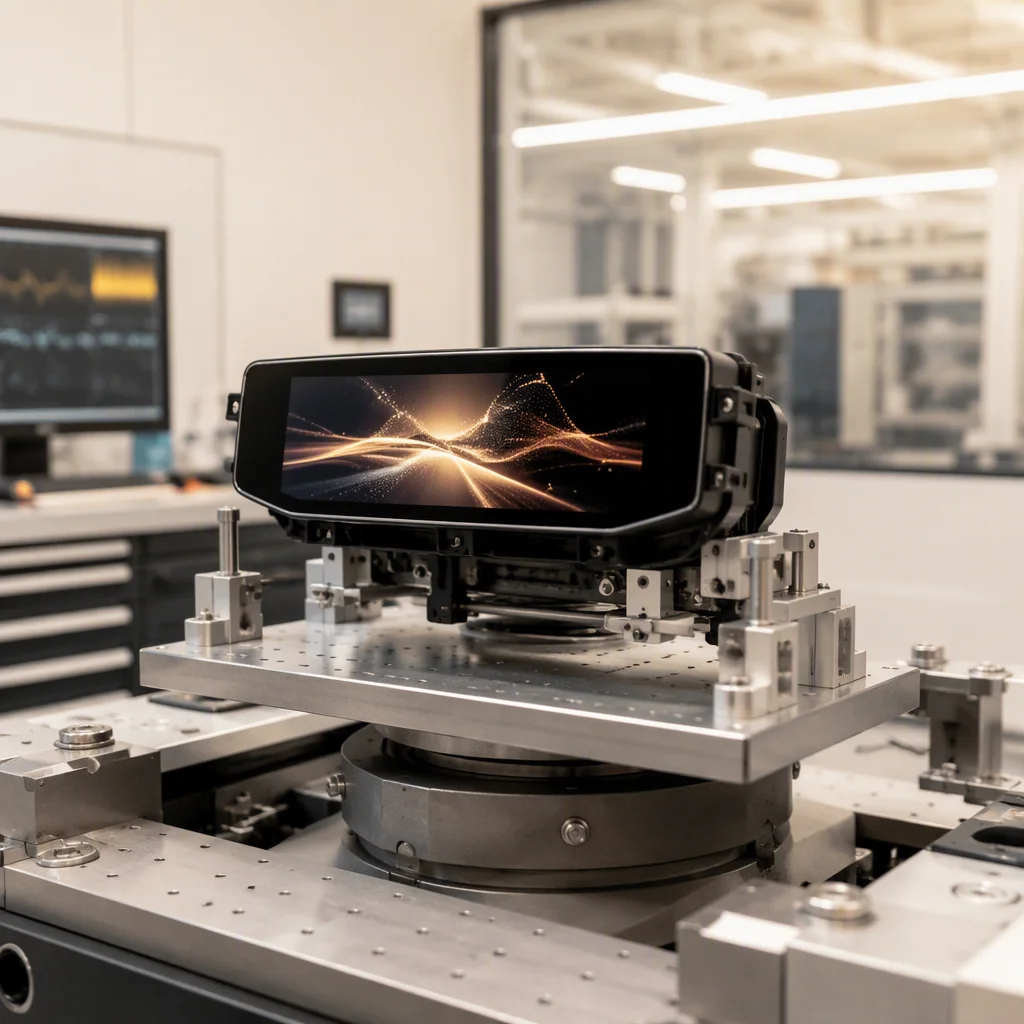
What automotive programs report back
Customer types and the numbers they measured — homologation time, surface temperature and vibration endurance in real vehicle programs.
AEC-Q100 Grade 3 stock let us switch suppliers mid-year without re-homologation — PPAP packs arrived with every sample lot, and the line never paused.
The 1,000 nits AG-covered cluster stayed readable in direct sun, and surface temperature held at 42°C inside the 65°C cabin soak test.
The bar-type 8.9" 1920×720 rear-view module survived 2,000 hours of vibration testing with zero failures before PPAP sign-off.
Send us your cabin spec — we'll return a vehicle-lifecycle supply plan.
Include panel size, interface, brightness target, temperature grade and annual volume. Automotive quotes carry AEC-Q100 documentation, PPAP support and a 48-hour response, FOB Shenzhen or DDP.