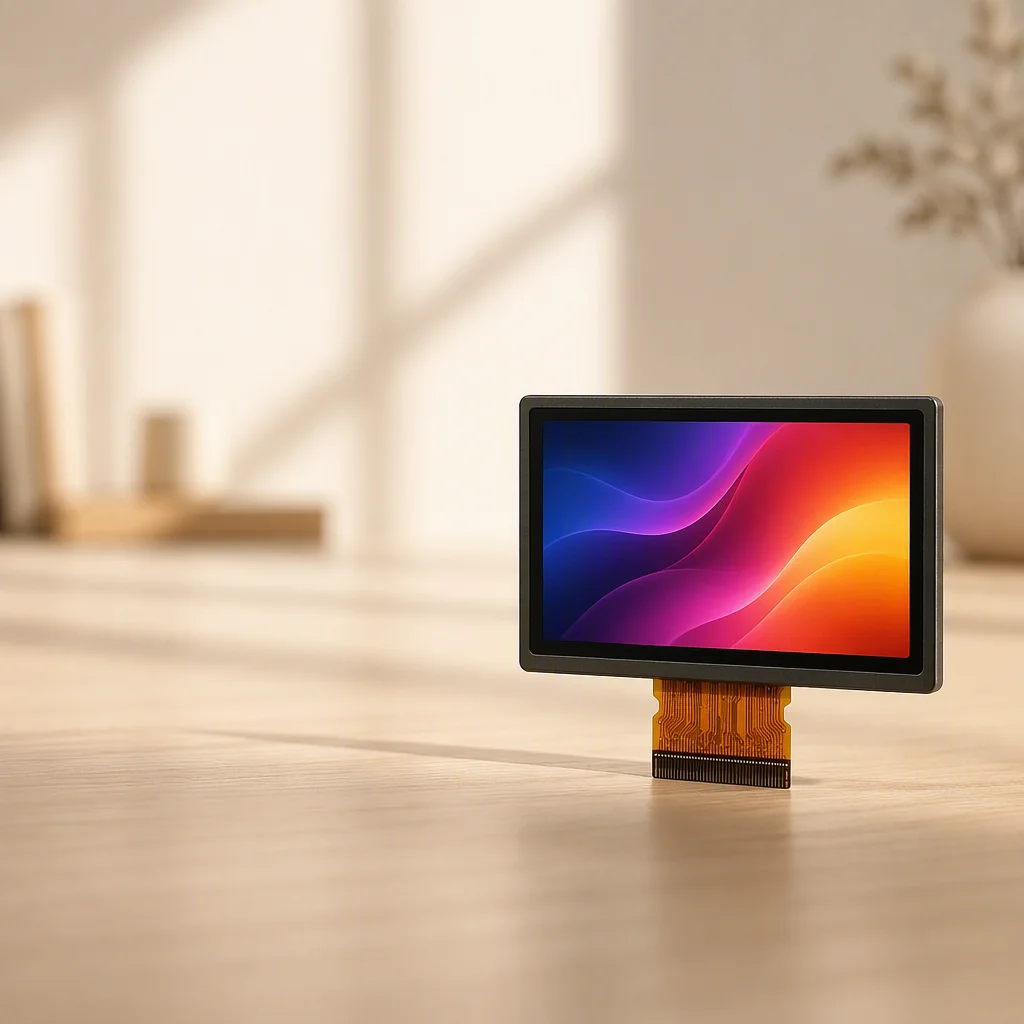
Touch Panel Integration from 0.85" to 15.6" — glued, covered and driven
Resistive RTP for gloved hands and stylus, capacitive PCAP with 5–10 point multi-touch, OCA full lamination, AG/AR cover glass and touch IC driver support — integrated at module level so your firmware team gets a proven stack, not a parts list.
One module, three touch technologies, full stack control
Touch is not an accessory we bolt on — it is laminated, covered and driven in the same Class 1000 cleanroom as the display itself. From a 0.85" wearable sensor to a 15.6" kiosk panel, we control the sensor, the adhesive, the cover glass and the driver configuration as one engineering unit.
| Touch types | Resistive RTP 4-wire / 5-wire · Capacitive CTP (PCAP) |
|---|---|
| Size coverage | 0.85"–15.6" across TFT, OLED and COG display lines |
| PCAP structures | G+G (glass + glass) and G+F (glass + film) sensor stacks |
| Multi-touch | PCAP 5–10 point; RTP single-touch with pen/glove support |
| Lamination | OCA full lamination (dust-proof, moisture-sealed) or air-gap bonding |
| Cover glass | AG anti-glare · AR anti-reflection · chemically strengthened, ≥85% transmittance |
| Touch IC | CST816S and mainstream IC ecosystem, I2C / SPI / USB interfaces |
| Driver support | Linux · Android · Windows, calibration and reference circuits |
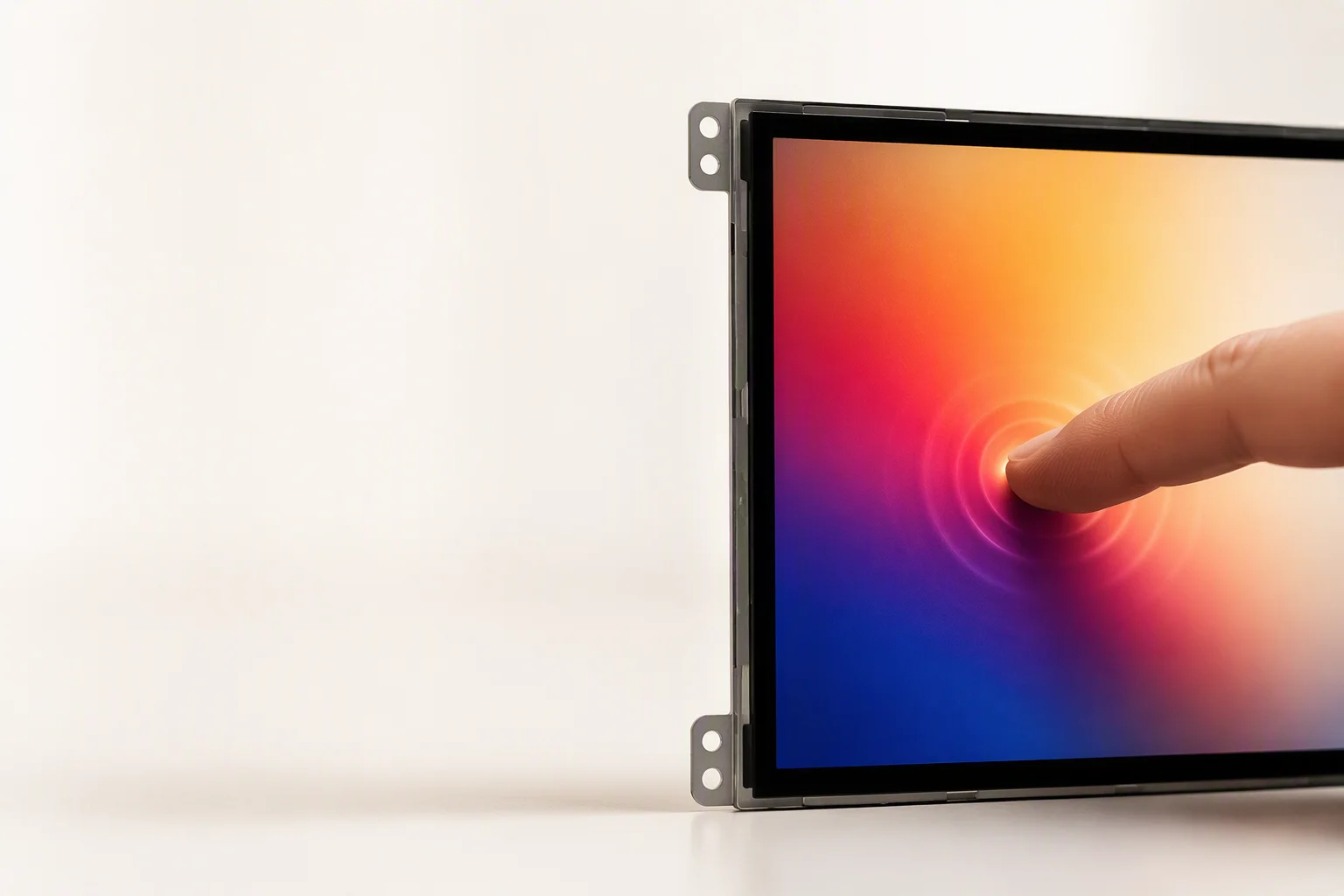
RTP when hands are gloved. PCAP when fingers do the talking.
Resistive RTP senses pressure, so it works with a bare finger, a gloved hand, a stylus or any rigid object — the reason 4-wire and 5-wire RTP still dominate industrial HMI, medical carts and food-service terminals. Capacitive PCAP senses the finger's capacitance change, enabling 5–10 point multi-touch, swipe gestures and the thin, bright glass finish consumers expect on kiosks and appliances.
- RTP 4-wire — lowest cost, single-touch, pen-compatible; ideal for price-driven industrial panels.
- RTP 5-wire — more durable and accurate than 4-wire; survives 35M+ touch cycles in POS and medical use.
- PCAP G+F — thin and light sensor film; suits smaller panels and cost-sensitive consumer builds.
- PCAP G+G — glass sensor over glass cover; strongest optical quality for 7"–15.6" kiosk and signage.
Resistive vs capacitive, decided by the numbers
The right touch technology is a trade of transmittance, durability, cost and input style. This table is the shortlist our engineers use on the first call — pick your rows, then we build the exact stack.
| Parameter | RTP (Resistive) | CTP / PCAP (Capacitive) |
|---|---|---|
| Input method | Finger, gloved hand, stylus, any object | Bare finger or capacitive stylus; glove modes optional |
| Multi-touch | Single-touch | 5–10 point, swipe and gesture support |
| Transmittance | ~75–82% (two ITO layers) | ≥85% with G+G structure |
| Durability | 4-wire ~1M touches · 5-wire 35M+ touches | No moving parts, 100M+ touch lifetime |
| Environment | Works with gloves, water and dust | Needs clean, dry contact; sealed builds for outdoor |
| Optical quality | Air-gap haze, softer contrast | OCA lamination, high contrast, thin glass finish |
| Cost | Lowest | Higher, scales with size and structure |
| Best fit | Industrial HMI, medical carts, food service | Kiosks, appliances, automotive, consumer devices |
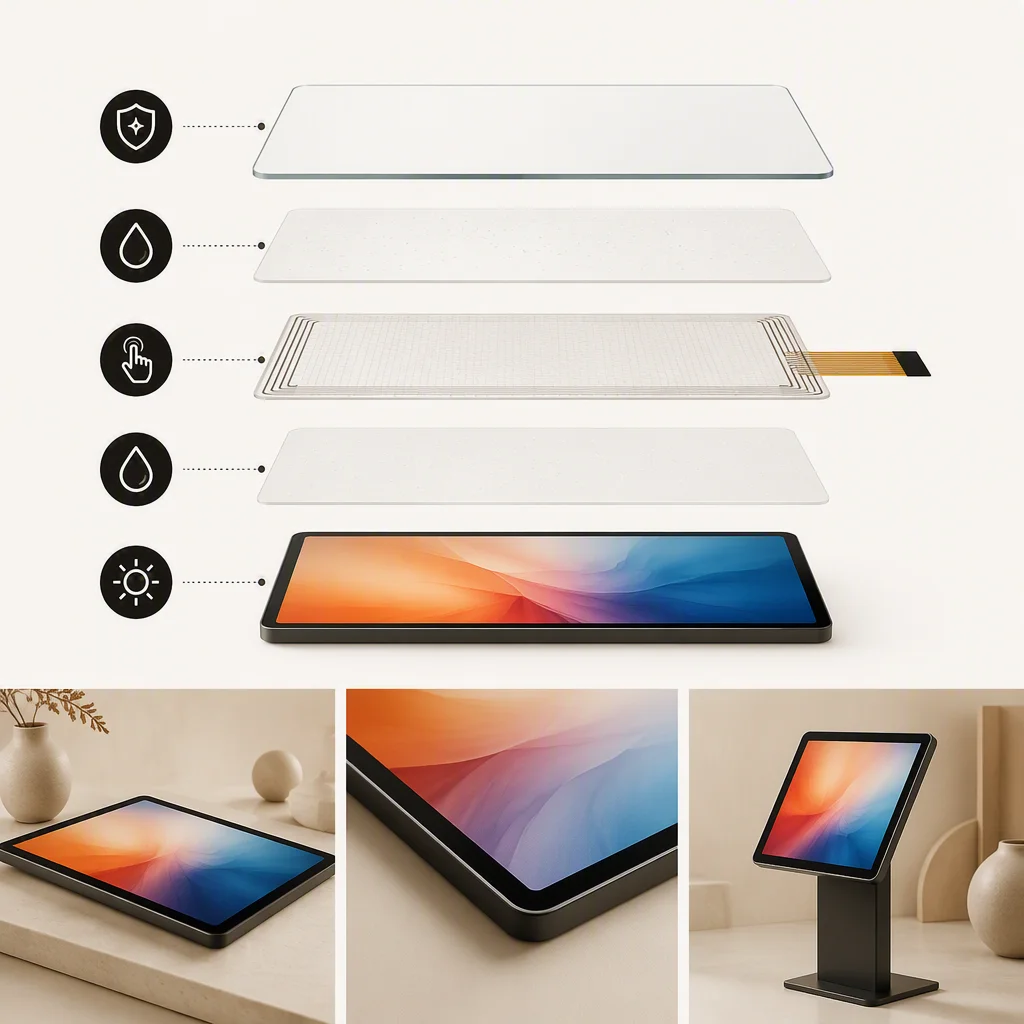
Four steps from bare glass to a touch module that ships
Every touch build runs the same four-stage integration chain under one roof. Each stage has its own inspection gate, so a lamination defect never reaches a driver board and a driver defect never reaches your production line.
Lamination Options
OCA full lamination seals dust and moisture for outdoor and automotive builds; air-gap bonding keeps cost down for indoor consumer panels.
Read MoreCover Glass
AG anti-glare for bright rooms, AR anti-reflection for sunlight, and chemically strengthened glass at ≥85% transmittance for durability.
Read MoreDriver & Calibration
CST816S and mainstream touch ICs with I2C / SPI / USB interfaces, plus Linux, Android and Windows driver support and calibration files.
Read MoreApplications
Kiosks, EV chargers, appliances, medical carts and industrial HMI — each with the sensor, cover and driver matched to the environment.
Read MoreTouch integration questions we answer every week
Short answers to the four most common touch questions. Anything else — send your environment and input style and we reply within 48 hours.
Tell us the finger. We will return the stack, the driver and the price.
Touch module MOQ 500 pcs — include size, input style (glove, stylus, bare finger), environment and volume. FOB Shenzhen, CIF or DDP, quoted within 48 hours.