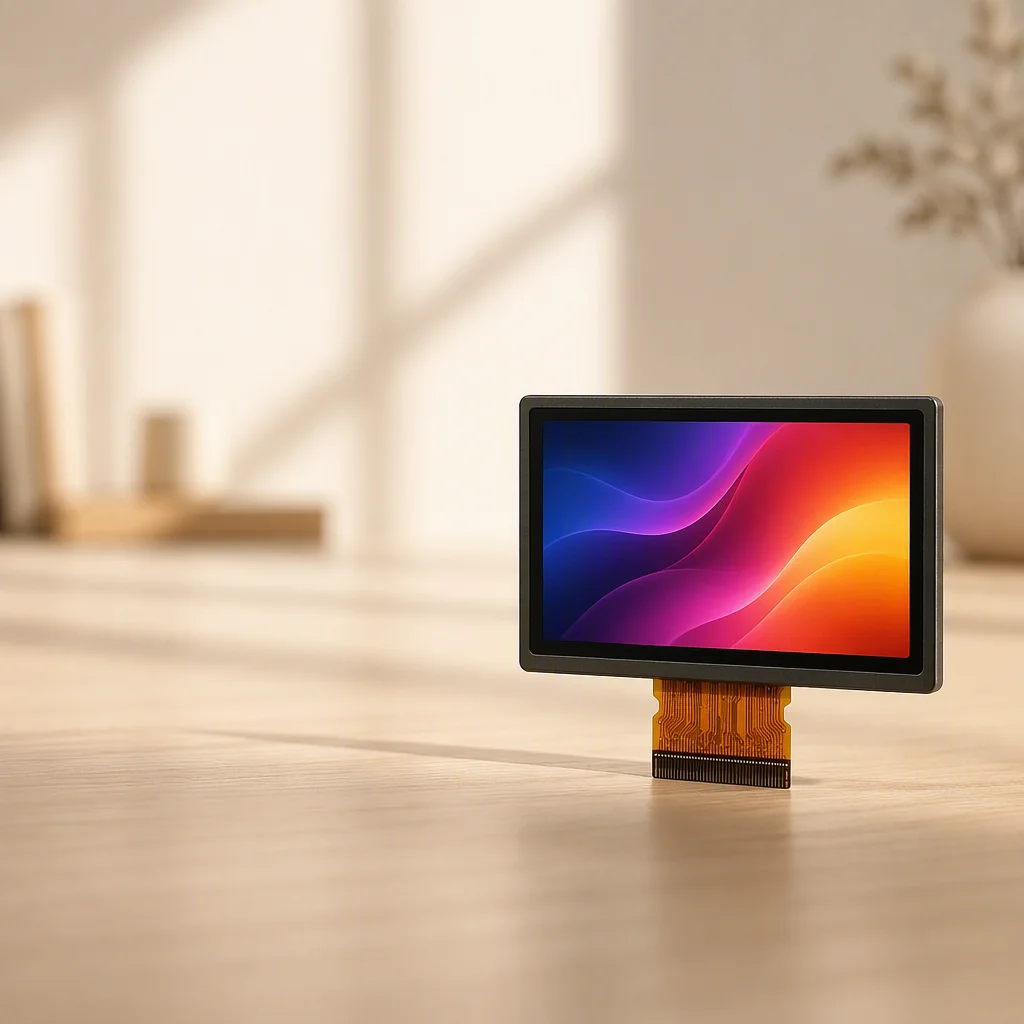
High-Brightness LCD Modules that stay readable in full sun
From 1,000 to 5,000 nits with optical bonding, AR coating, IP65 front sealing and engineered thermal paths — built for EV chargers, outdoor kiosks, transit signs and digital signage that face the sun every day.
Sunlight readability is a system, not a single number
Raising backlight brightness alone washes out under direct sun — glare from the cover glass and internal reflections cancel the gain. The industry threshold sits at 1,000–1,500 nits for basic outdoor use, 2,500–3,500 nits for true sunlight, and up to 5,000 nits for extreme conditions. We engineer all four levers together: brightness, optical bonding, AR coating and contrast.
| Brightness range | 500 / 800 / 1,000 / 1,500 / 2,500 / 3,500 / 5,000 nits grades |
|---|---|
| Industry thresholds | 1,000–1,500 nits basic outdoor · 2,500–3,500 nits true sun · 5,000 nits extreme |
| Optical stack | Optical bonding + AR anti-reflection film + high-contrast panel |
| Bonding benefit | Reduces internal reflection 60%+, roughly doubles perceived contrast |
| High-transmission CTP | Capacitive touch ≥85% transmittance for bonded touch builds |
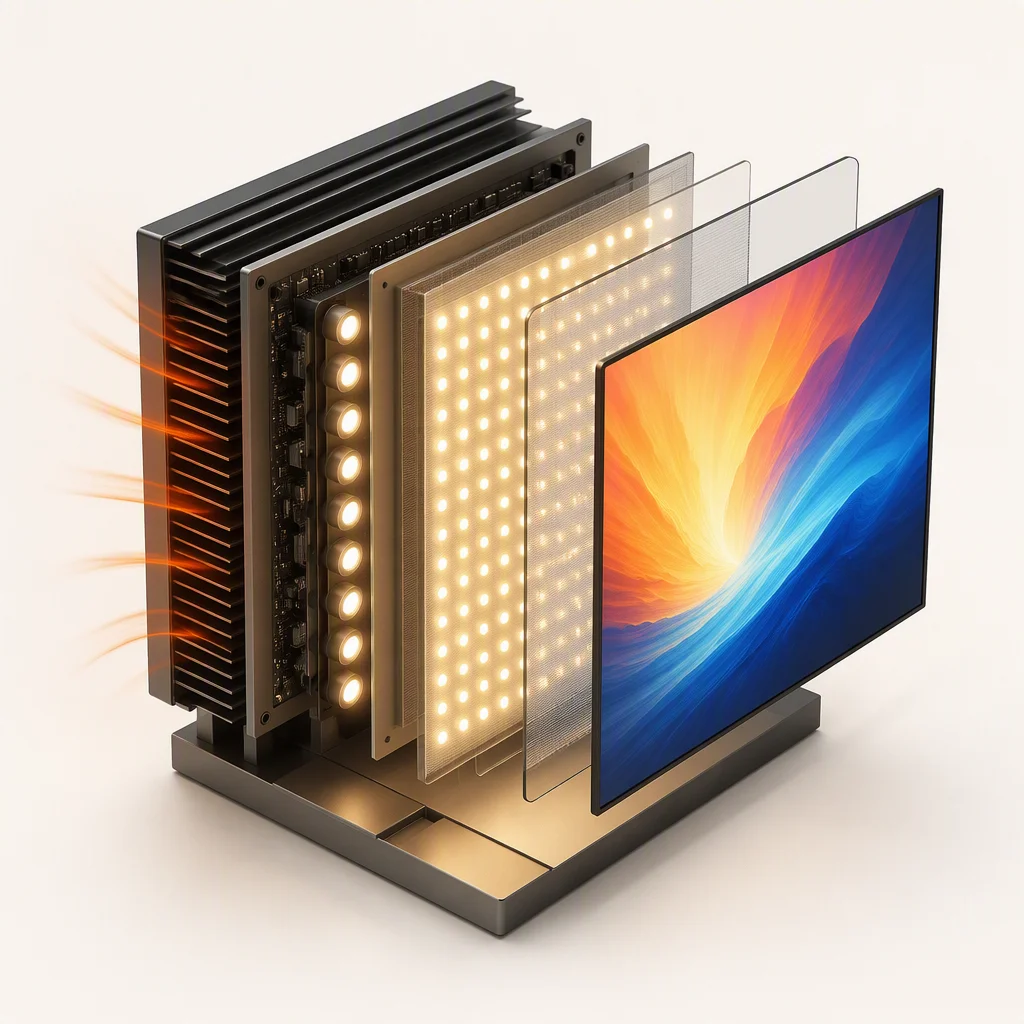
| Thermal design | Direct LED array (≥3,000 nits), aluminum-frame conduction, passive cooling |
| Outdoor sealing | IP65 / IP66 front assemblies, UV-resistant cover, optional IK rating |
| Temperature | -30~+85°C operation, peak vs sustained brightness spec at 25°C / 45°C |
Nine brightness grades, matched to the light that hits them
Every tier below is a real, repeatable build — not a marketing figure. Peak brightness is specified at 25°C ambient; sustained brightness is what the display holds at 45°C after the thermal path stabilizes. If your site is shaded or glass-fronted, tell us — we derate from these numbers, not to them.
| Brightness | Typical use | Backlight | Optical stack | Sustained @45°C |
|---|---|---|---|---|
| 300 nits | Indoor consumer, office HMI | Edge-lit LED | Standard cover | 100% |
| 500 nits | Bright indoor retail, POS | Edge-lit LED | Standard cover | 100% |
| 800 nits | Semi-outdoor, kiosk under canopy | Edge-lit LED | AG film | 95% |
| 1,000 nits | Basic outdoor, covered signage | LED array | AR coating | 90% |
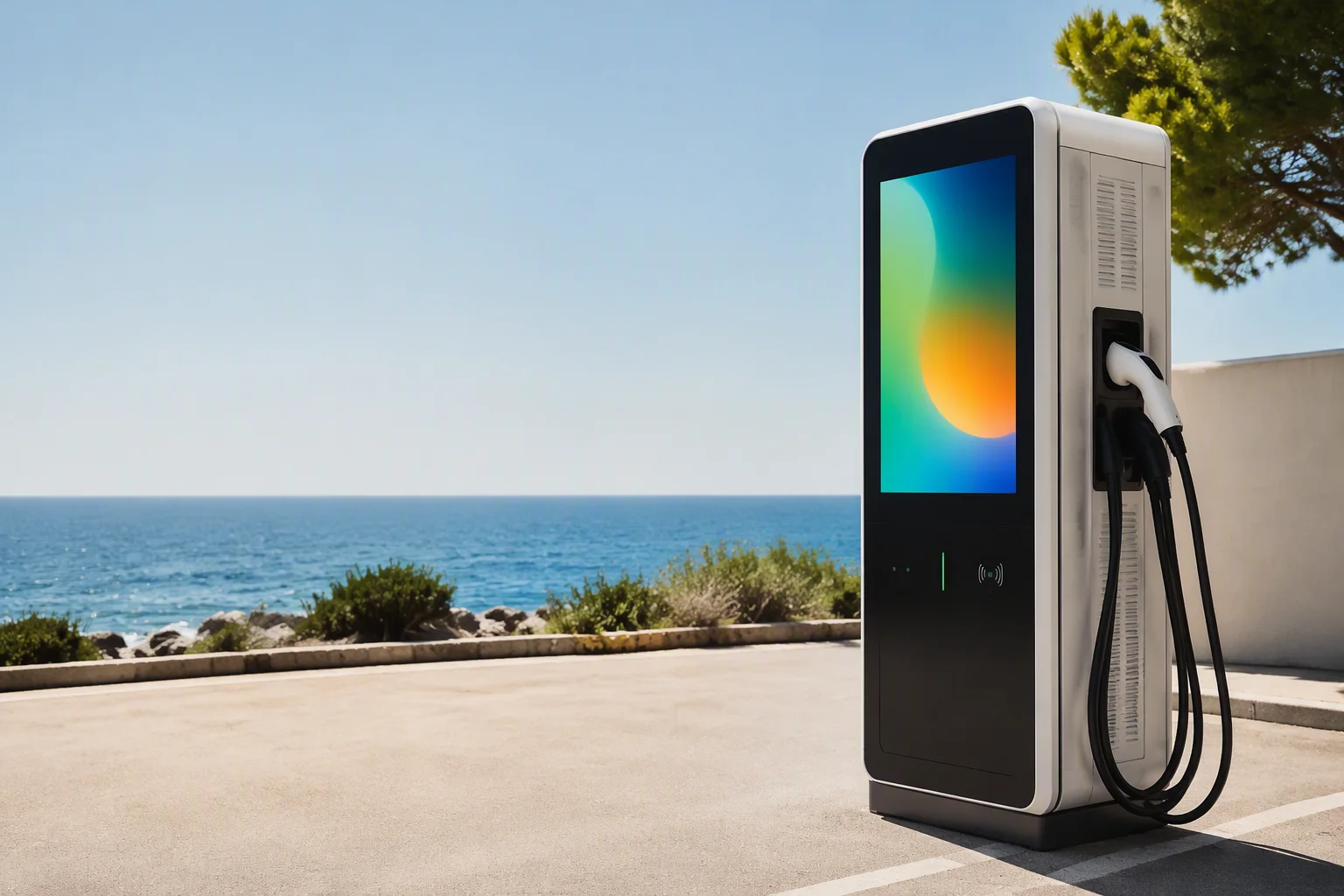
| 1,500 nits | Outdoor kiosk, EV charger | LED array | OCA bonding + AR | 88% |
| 2,300 nits | 7" full-bonded CTP build | LED array | OCA + AR + CTP ≥85% | 85% |
| 2,500 nits | True sunlight, handheld field units | Direct LED array | Full stack | 83% |
| 3,500 nits | Direct-sun transit and pump signs | Direct LED array | Full stack | 80% |
| 5,000 nits | 21.5" extreme signage | Direct LED array | Full stack + cooling | 75% |
| Peak vs sustained | Specified at 25°C / 45°C ambient | Aluminum-frame path | Passive cooling | Data sheet dual spec |
Four disciplines behind a display that survives the street
An outdoor module is a thermal, optical, mechanical and environmental product at once. These four pillars are what separate a sunlight-readable build from a bright panel that fails its second summer.
Optical Technologies
OCA optical bonding cuts internal reflection 60%+, AR film tames glare, and high-transmission CTP keeps touch builds above 85% transmittance.
Read MoreThermal & Mechanical
Direct LED arrays from 3,000 nits, aluminum-frame heat conduction and passive cooling hold sustained brightness — specified at both 25°C and 45°C ambient.
Read MoreOutdoor Protection
IP65 / IP66 front sealing, UV-resistant materials, -30~+85°C operation and optional IK impact ratings for vandal-prone sites.
Read MoreField Applications
EV chargers (1M+ installed across Europe), outdoor kiosks, transit stops, fuel stations and marine panels from 10.4" to 86".
Read More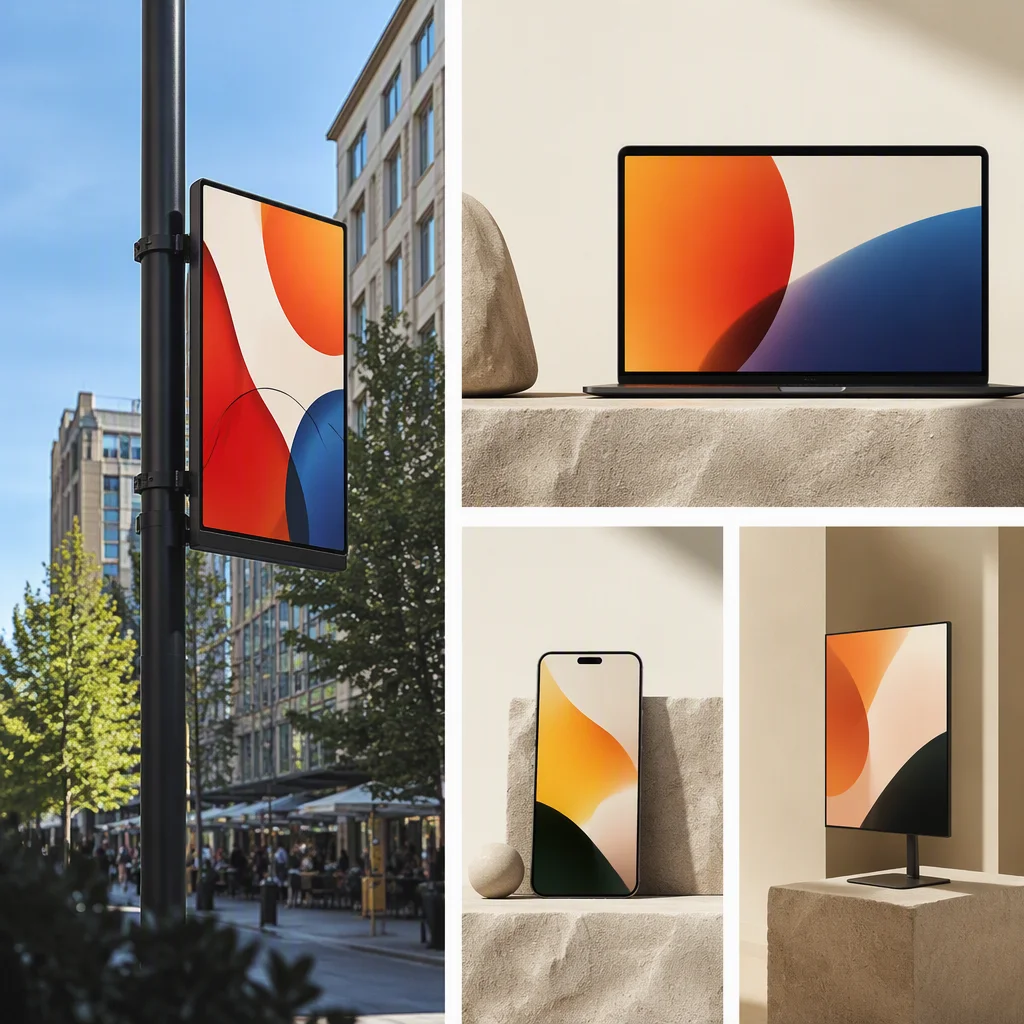
High-brightness questions we answer every week
Short answers to the four most common sunlight-readability questions. Anything else — send your site conditions and we reply within 48 hours.
Send the site. We will return the nits, the stack and the schedule.
Custom brightness evaluation and free selection consultation — include location, sun exposure, viewing distance and size. FOB Shenzhen, CIF or DDP, quoted within 48 hours.