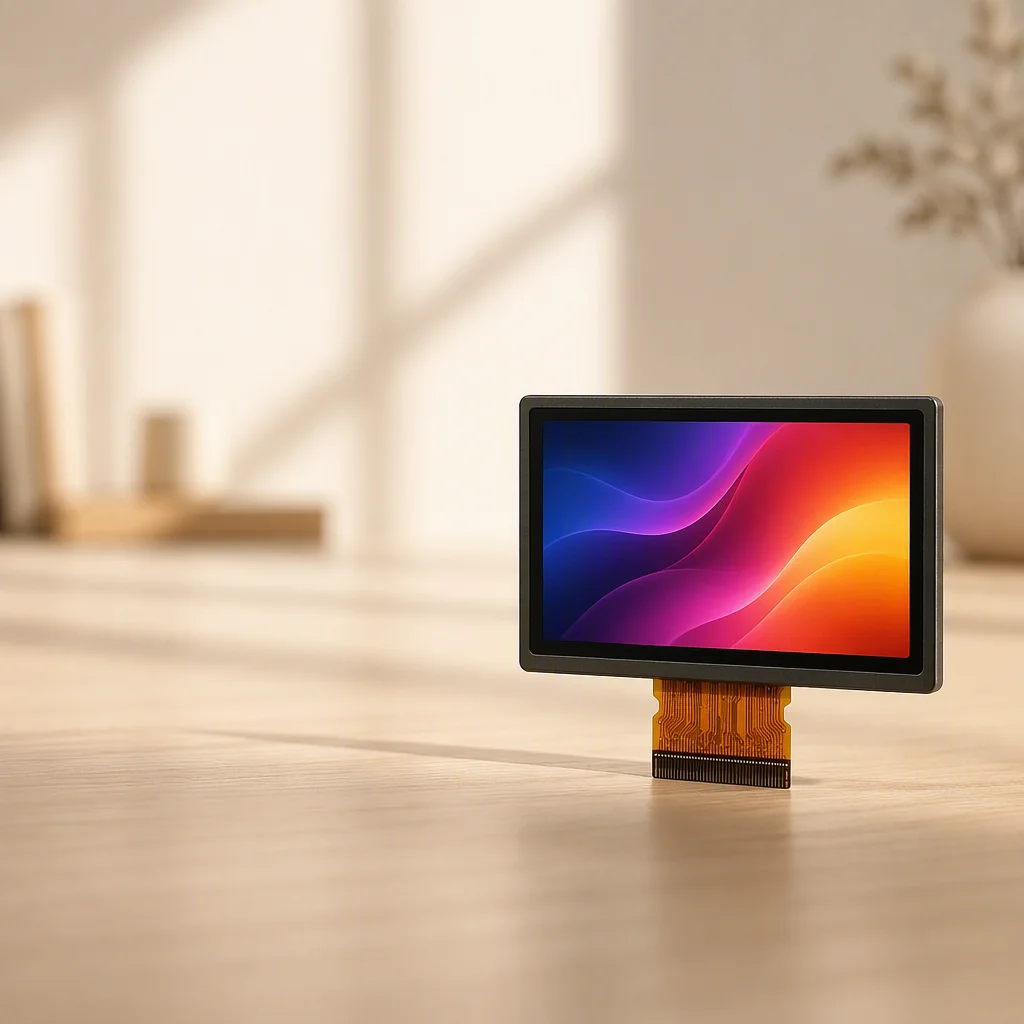
A tour of our Shenzhen display module factory
Class 1000 cleanrooms, COG/COF bonding lines, backlight assembly and OCA lamination — 10,000 m² of vertical integration with a 500K–1M pcs monthly capacity and full QC at every station.
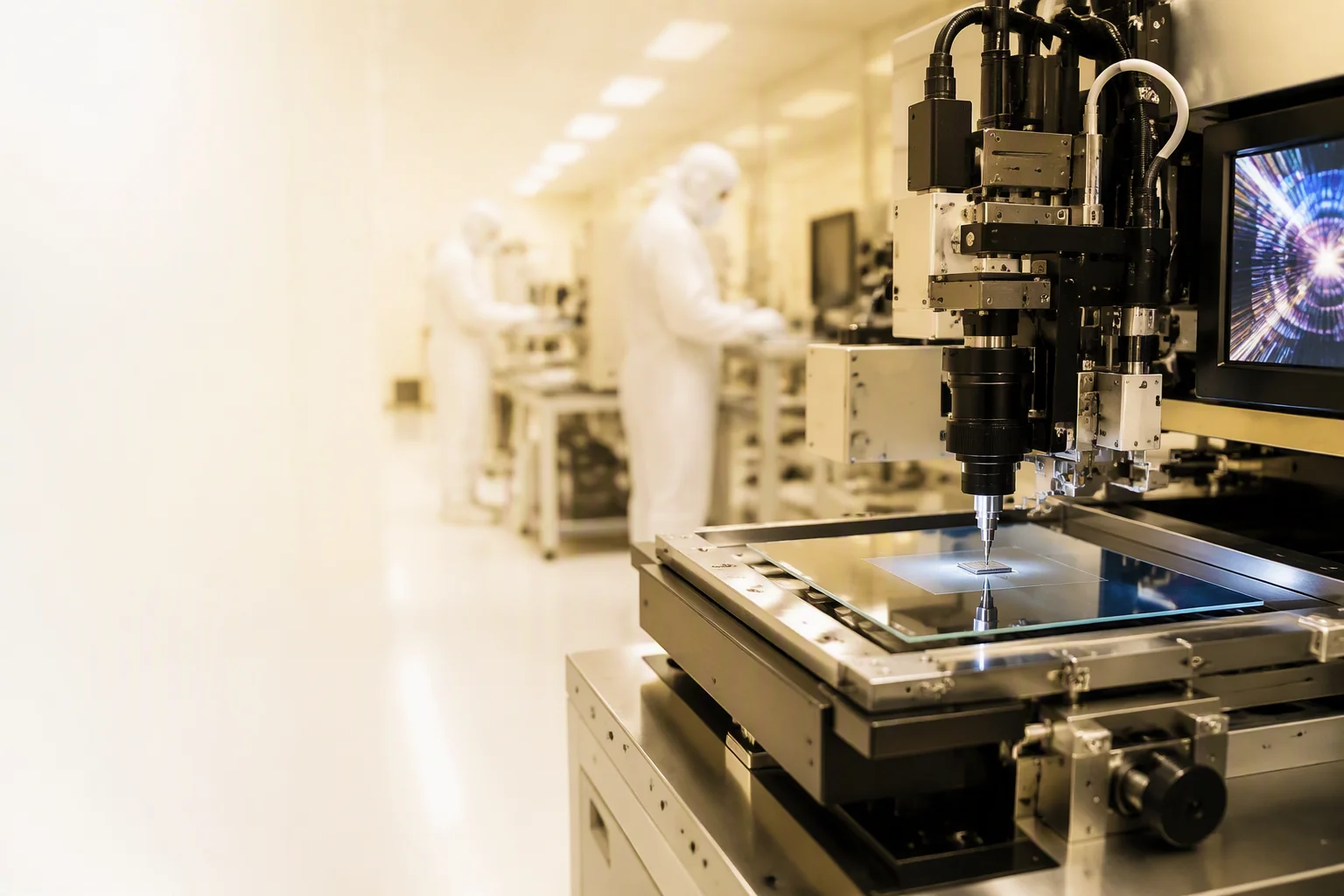
One campus owns every step of the module
From glass cutting to board-level assembly, the whole chain runs under one roof: panel cutting, COG/COF bonding, backlight assembly, full lamination and module test. Owning the line means we control yield, schedule and traceability instead of coordinating three subcontractors.
The production floor runs to a Class 1000 cleanroom grade — the same used for semiconductor handling — because a single particle trapped under a cover glass becomes a rejected module. Bonding lines hold a yield target of ≥99.5%, and every line feeds AOI plus a 100% powered-on test before packing.
- Class 1000 cleanrooms — particulate-controlled zones for COG bonding, lamination and final assembly.
- Vertical integration — cutting → bonding → backlight → lamination → board-level assembly in one building.
- Dual-shift capacity — 500K–1M modules per month with ERP-scheduled batches.
- Imported bonders & placers — ACF press, die bonder and SMT placement from established equipment makers.
- ERP traceability — every batch is tied from cell lot to carton, so a field return can be traced to its bonding line within minutes.
Six stations, from raw glass to sealed carton
Every module passes the same six-station chain — cutting, bonding, backlight, lamination, test, packaging. There is no shortcut lane: the sequence is fixed, the process parameters are recorded, and each step is verified before the module moves on.
Cell Cutting
Precision 2nd-cutting of glass to your active area, with edge chamfering and ultrasonic cleaning before bonding.
COG / COF Bonding
Driver IC and FPC joined with ACF under heat and pressure at ±0.05 mm alignment in a Class 1000 zone.
Backlight Assembly
LED bar, light guide and optical films stacked on a clean bench; brightness tuned from 300 to 5,000 nits.
Full Lamination
OCA optical bonding of touch and cover glass, sealing the stack against dust and moisture for outdoor and vehicle duty.
Module Test
AOI optical inspection plus a 100% powered-on display test of colors, backlight and touch response.
ESD Packaging
Antistatic trays, moisture-barrier bags and sealed cartons, each batch stamped with a QR traceability code.
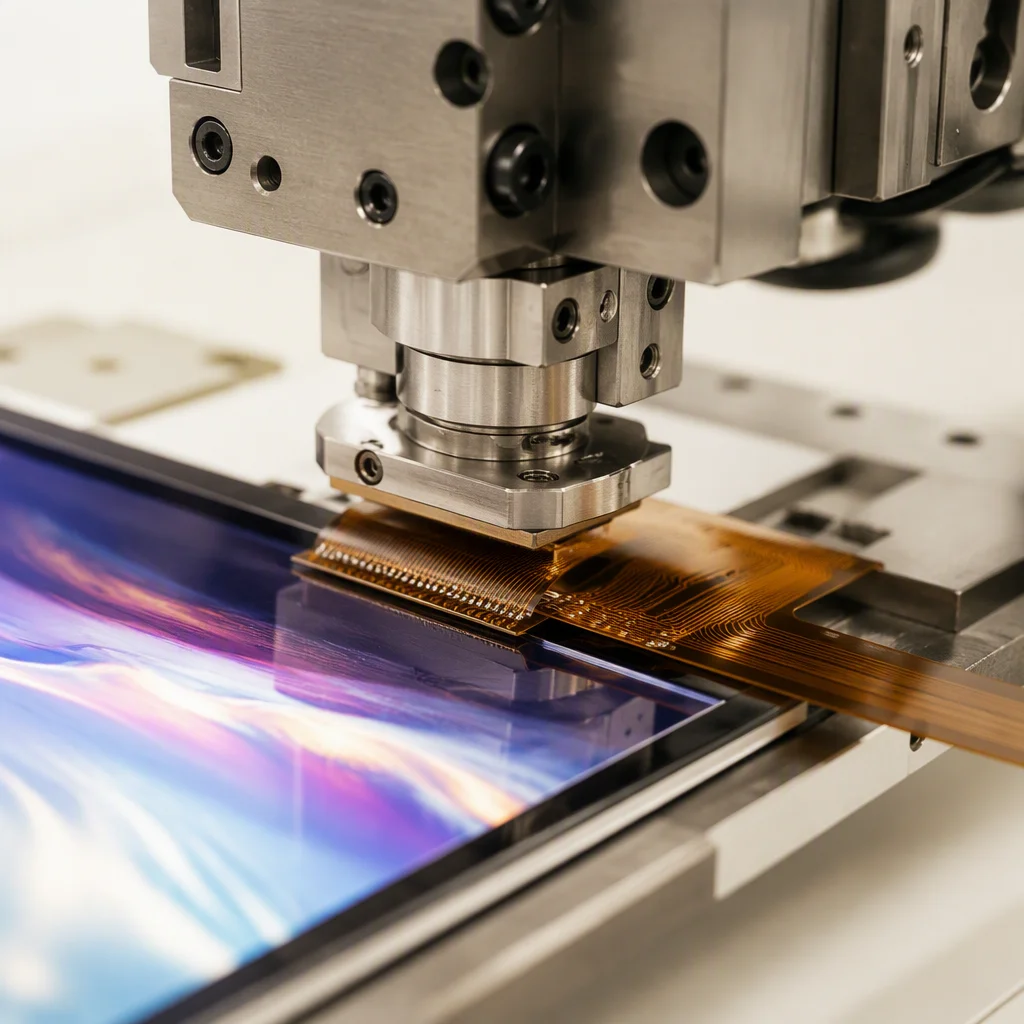
ACF Bonding
Anisotropic conductive film bonds the FPC and driver to glass under controlled heat and pressure — the joint every pixel signal travels through.
ACF · FPC to glass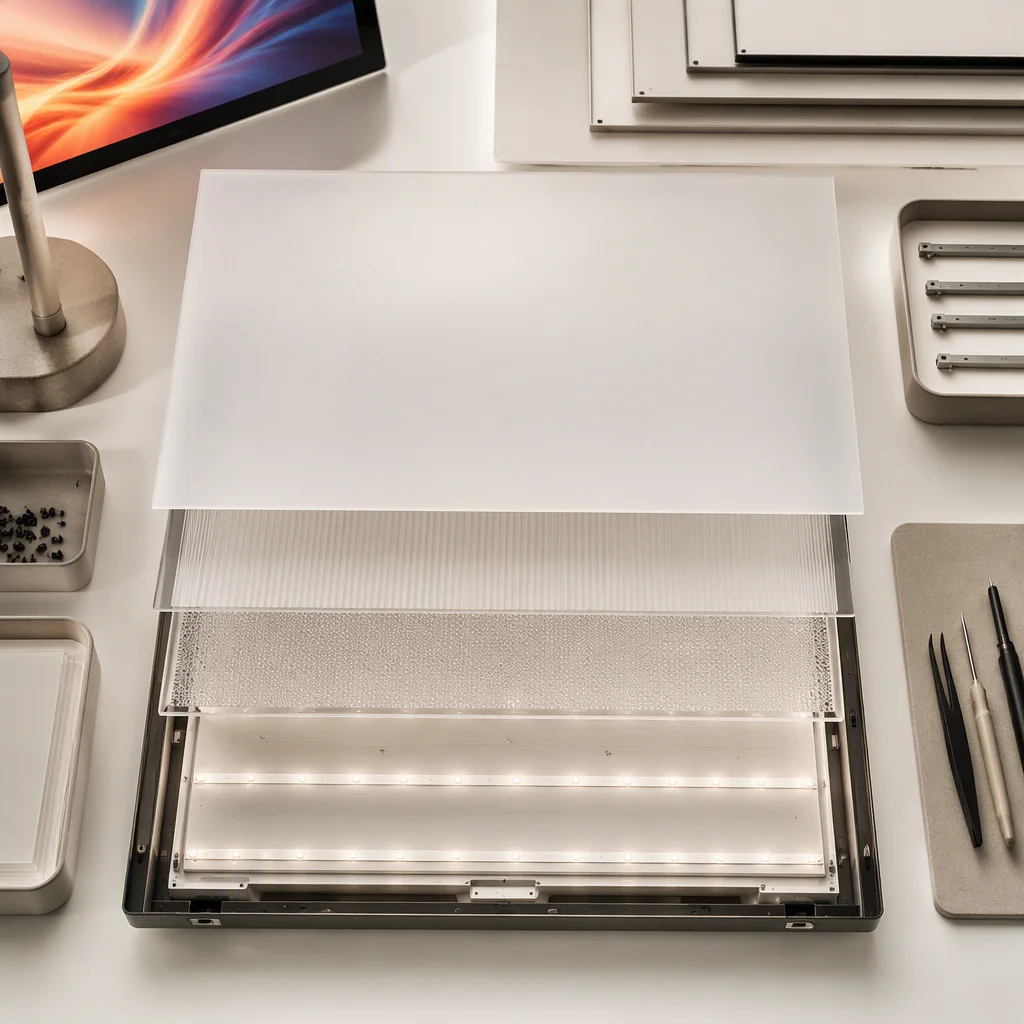
Backlight Station
Diffuser, prism and light-guide films are stacked over the LED bar on a clean bench, then measured for brightness and uniformity.
LED bar + light guide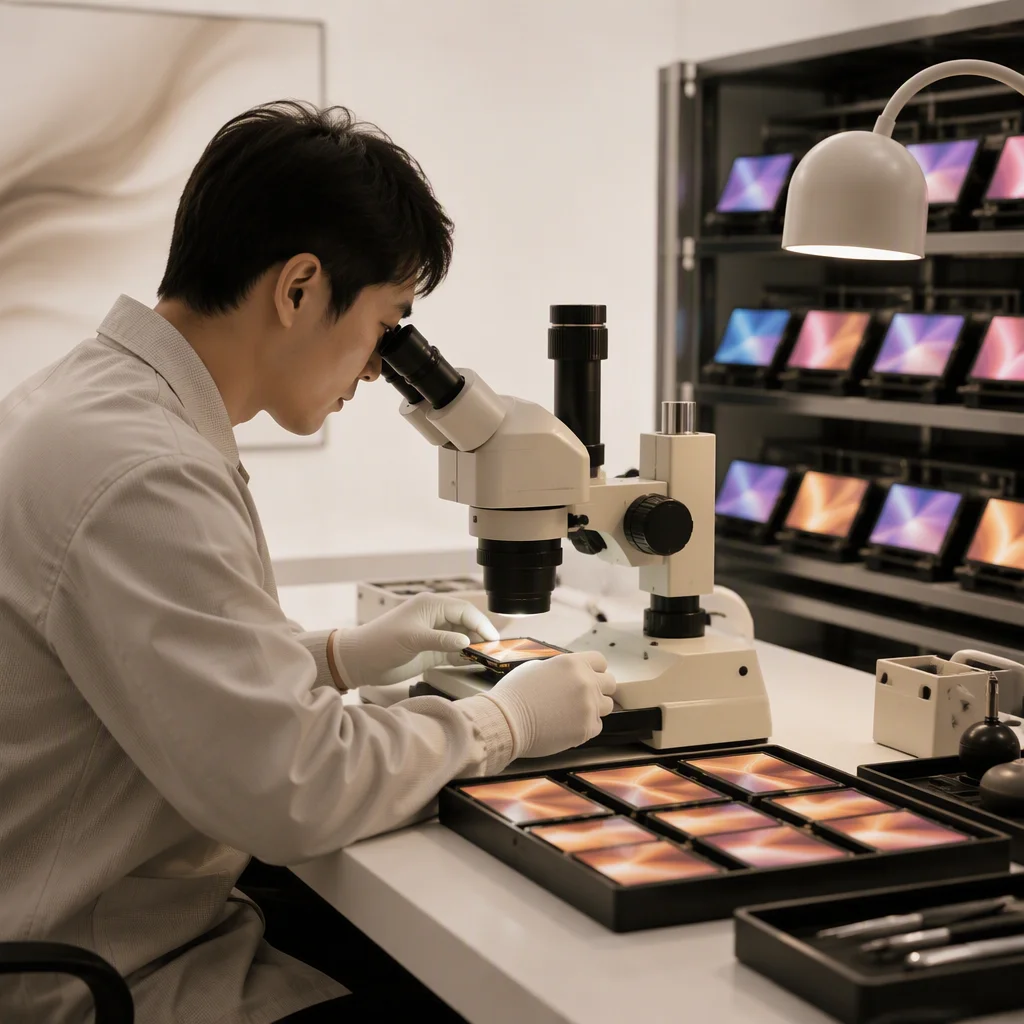
Microscope Inspection
Bonded joints and laminated layers are checked under magnification; any particle or bubble stops the batch for rework.
Class 1000 labThe numbers behind the line
Capacity is only half the story. The same floor runs board-level modules from 1.3" to 21.5" with UART, HDMI, Android and Linux systems, plus a reliability lab that qualifies every automotive and medical program.
Reliability sampling covers temperature shock, 85°C/85%RH high-temperature high-humidity, ESD, salt spray, drop and vibration — with automotive builds qualified to -40~+85°C and medical programs aged for 10-year supply. Board-level assemblies include 4-layer PCB design support and firmware bring-up for UART, HDMI and Android panels. ERP/QR batch traceability has run since 2021, and EOL alerts go out 12 months before any panel line closes.
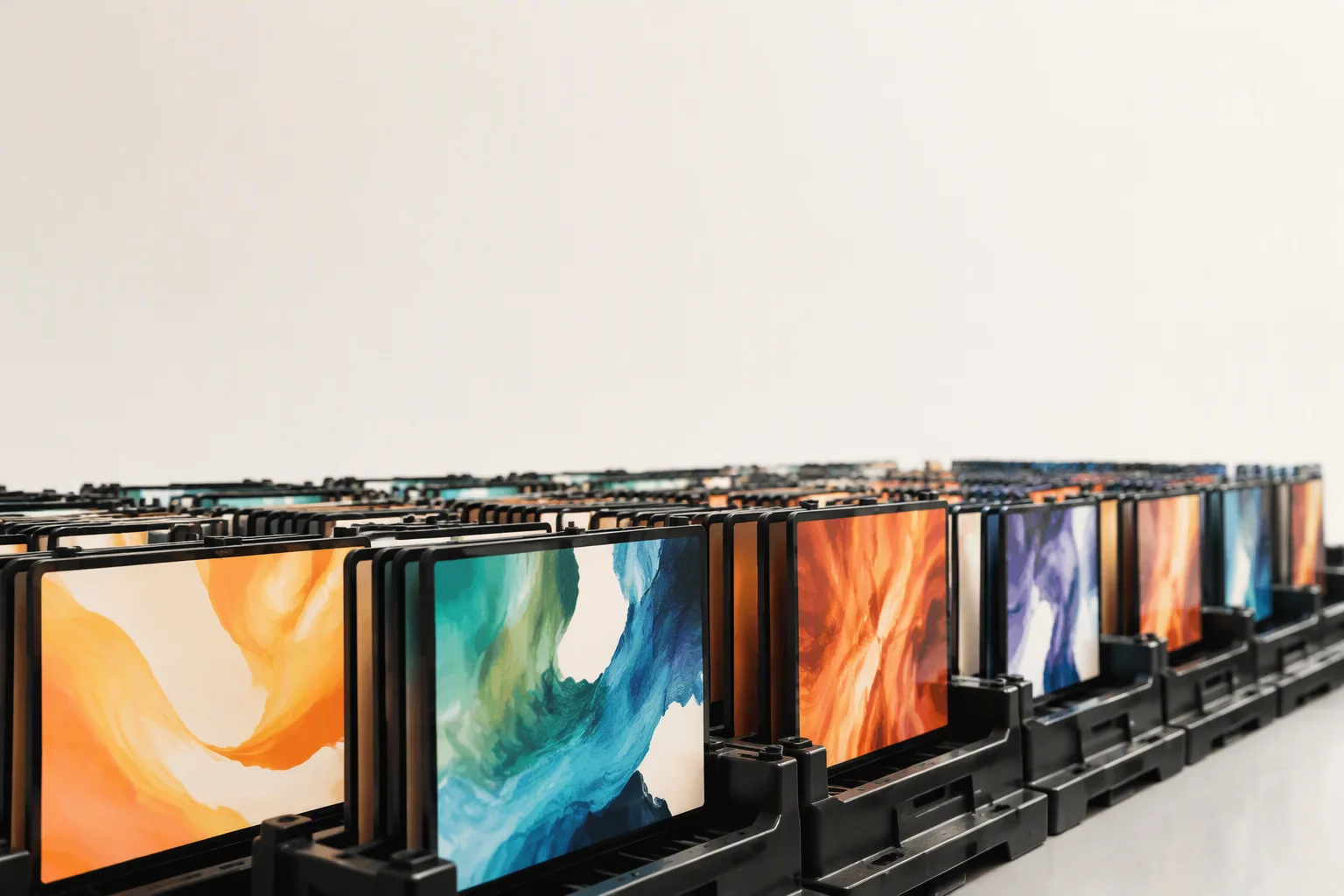
See the line before you commit — live video audit or on-site tour.
We support video factory audits and on-site visits by appointment, with samples in 7–15 days and mass production in 20–35 days after approval, FOB Shenzhen, CIF or DDP.